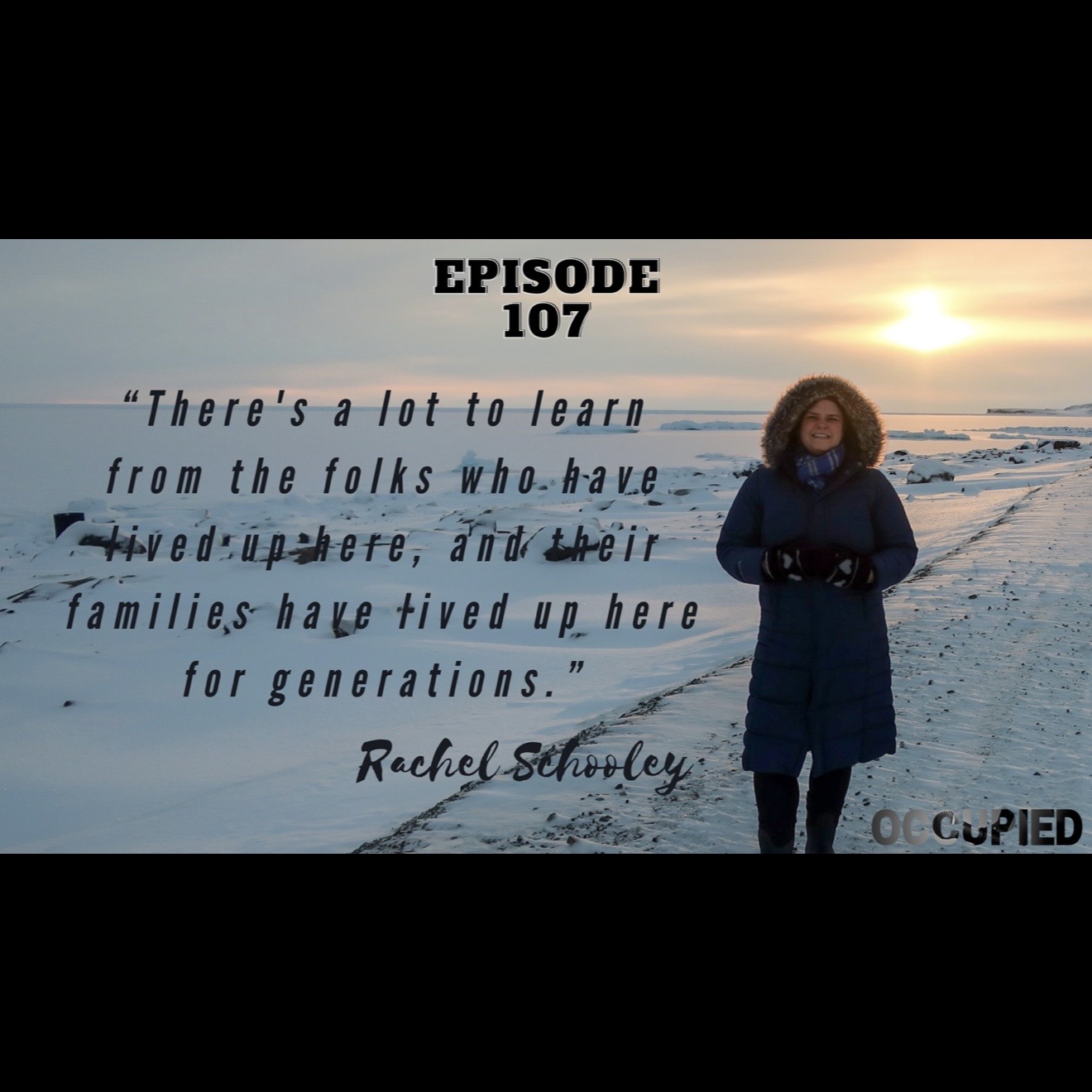
On Occupied we get to speak to a lot OT’s from all over this amazing world but when I heard that there were OT’s in the Arctic I was blown away! This is why I had to bring in Rachel Schooley on to explore this very unique part of the world to practice in. Exploring how Rachel navigates living on traditional peoples land and working with their populations. This convo was absolutely eye opening and I thoroughly enjoyed it.
Look after yourself, look after others and always keep Occupied
Brock
@brockcookOT
brock.cook@me.com
www.occupiedpodcast.com
www.patreon.com/occupiedplus
Transctiption
Brock Cook 0:00
Have you ever been to the Arctic? Have you ever worked in the Arctic? Have you ever even considered what an OT might do in the Arctic? Well, this episode is gonna hopefully shed some light on that, as I had the amazing Rachel skoolie come in and talk about her job doing exactly that. The Arctic OT, we discuss a lot of the challenges benefits of this very unique environment. Get a My name is Brock Cook, and welcome to occupied. In this podcast, we’re aiming to put the occupation in occupational therapy, we explore the people, topics, theories and underpinnings that make this profession so incredible. If you’re new here, you can find all of our previous episodes and resources that occupied podcast.com. But for now, let’s roll the episode. Yeah, so
Rachel Schooley 1:04
I was working in group homes for many years, kind of, you know, between my teens into my 20s, and have done a degree in sociology and women’s studies, that was my undergraduate degree. And my partner had just finished a degree in biology and was applying to become an OT, and I had no idea what ot was at that time. After a bit of investigation, yeah, it just seemed like all the parts of the job I already had, that I loved the most really like finding things that were meaningful for folks that are improved quality of life and bring joy to activity. And so I thought I would apply as well. And we actually ended up doing the OT program at the same time with a with a baby and it was great. You know, I learned a lot and definitely opened my eyes to a lot of different parts of ot some some that really fit well with what I wanted to do with my life and others not so much. But I think that’s the beauty of the profession, too, is that you can kind of make it fit with with what you’re looking for, in some circumstances, others maybe not so much.
Brock Cook 2:24
Yeah, definitely. And that’s something I try and tell people a lot is that it isn’t, I don’t view it as sort of this unique, while it is unique, but this sort of very individualized profession. It’s kind of something that you combine with skills that you already have, or experiences you’ve already had, and then you turn it into whatever you want.
Rachel Schooley 2:46
Absolutely. Yeah. And it’s interesting, because, you know, my first year of our ot program, and it’s a master’s level program in Canada, I guess, probably all over the place it is. But I thought like what have I done? Just doing, you know, anatomy courses, and like I said, Bachelor of sociology and women’s studies, like never touched anatomy with a 10 foot pole. That’s no, not nominated. Yeah, exactly. And it’s pretty intense. Like we had three months to learn the entirety of it. And I felt a little bit like my first placement was on stroke rehab, and I really did enjoy it I loved. And because I had the experience with the group homes, I was trusted to do the transfers and different parts of the placement that maybe if I were a fresh grad with no work experience I would have been able to do and so that was really great. But my second placement, student placement that I had was at the AIDS committee of Kitchener Waterloo. And so working with folks that, you know, were living with HIV, and it was more of a systems level placement. So less clinical work, but more looking at like, how are we informing the programming that’s available to these folks and speaking to policymakers and so that was like my first dose of, of systems level OT and I loved it, and I love the social justice components that that I could dive into with ot. And it kind of just snowballed from there. My next placement was with the hepatitis C clinic who I actually ended up working for after graduation. They have an amazing mobile health unit. And so yeah, yeah.
Brock Cook 4:46
What I’ve never heard of it working on a health clinic, what’s what’s the OTS role on
Rachel Schooley 4:55
the clinic itself, you know, it has the medical side of things. But because, you know, the people that are most at risk for hepatitis C, or those who, you know, are using intravenous drug because and maybe unstably housed or or houseless. And so a big part of my role there was exploring, I mean, a big part of it was really exploring what it does, because there was no team working there when I did my student placement. And so it was doing a lot of outreach with this incredible team, like Dream Team, and they had a mobile health unit that would go out when I was there, I think it was only once or twice a week in the evenings. And they would literally meet people where they were at. So we’d go to various parks or whatever, and provide, you know, harm reduction supplies, but also just necessities of daily living. And my role was like a slow, it was a slow roll out. So initially, like gaining trust of folks, but then really, like, there was one fellow who was just kind of like always tapping on things and, and got to know him a little bit and found out that he used to play the drums and really enjoy playing the drums and found that was really soothing. And so like, I didn’t need to talk about what occupational therapy was right? Like, that wasn’t important, but how do I help facilitate access to this occupation that’s meaningful for him?
Yeah, and so that was kind of it, I did a bit of support coordination for them after graduation. So not all, specifically, OT but there was a lot of cognitive component to and, you know, working with folks on this harm reduction idea of, Okay, if you want to, you know, use less substance in your life, what, what can you do during that time that will be enjoyable for you and will make, you know, the reduction of substance use more attainable? It was awesome. I love that job is great.
Brock Cook 7:03
So that that harm reduction thing, as I assume were you and Rina connected
Rachel Schooley 7:08
yes, yes. Yeah, it’s funny, you know, I didn’t I until I listened to her episode with you, I didn’t realize that she was, you know, the moderator for harm reduction ot or whatever the Facebook group is. I remember that being kind of an early connection for me with my old Facebook profile that I’d left behind a couple years ago, but because I really at that time, couldn’t I didn’t have any connections of other OTS doing the work. And I remember even asking my call, like, how do I document my interactions with people when they don’t trust enough to even give me their name? Well, their health? You know, like, I don’t need to know how, and they were like, well, if they’re not giving you their name, like are they really in a place where they should be getting occupational therapy services not struck me a lot is like, maybe there needs to be a change in our profession a little bit, because I think anybody could use occupational therapy services, and everyone is deserving of them. But especially folks who are super marginalized, like we have this ability to kind of assess the situation in a holistic way and and figure out the best means of support moving forward, and it could be delegation, you know, like, connecting the person to a social worker connecting them to support coordination and connecting them to health care. But I think
Brock Cook 8:36
Yeah, yeah,
Rachel Schooley 8:37
I think ot I’m glad to see it moving in that direction a little bit or not, you know, I’ve chatted with Rina, a bit about it as well. Because it was a huge area of passion of mine before moving up here. And it remains a huge area passionate, it fits whatever geographical area you’re in. So yeah.
Brock Cook 8:57
So you made mention of it just then when you said moving up here, and that was one of the reasons why we are why your account on Instagram originally caught my, my eye and what we originally connected over and what I wanted to have a chat with you about. So your Instagram account is Arctic ot. And I was like, that sounds interesting. Because I feel like the majority of the world probably outside of your area of the world when they think of the Arctic they’re either gonna think of Polo Santa. So are you able to explain I guess why you are called the Arctic OT?
Rachel Schooley 9:39
Yeah, why am I Well, I mean, I guess I was looking for like a simple way to connect with other OTS and hoping really to connect with other OTS working in the circumpolar region because we’re You know, in, in this entire region where I’m in right now, there’s three of us, and one is my partner, and myself and then another fellow. And I think we’re pretty limited in terms of ot support or the type of work that we’re able to do. And so I was really looking to connect with other people living and working in the solar