DURING THIS PODCAST TOPICS SUCH AS SUICIDE, SELF HARM AND MENTAL ILLNESS ARE DISCUSSED. IF THIS IS A TRIGGER OR MAKES YOU UNCOMFORTABLE, LOOK AFTER YOURSELF AND DON’T FEEL LIKE YOU HAVE TO LISTEN.
A while ago I asked the audience what topics they would like episodes on and there was a big swell of support for an episode on how to have conversations with people about difficult topics. On top of that, there was a lot of people recommending that I get this gentleman in to have that conversation with.
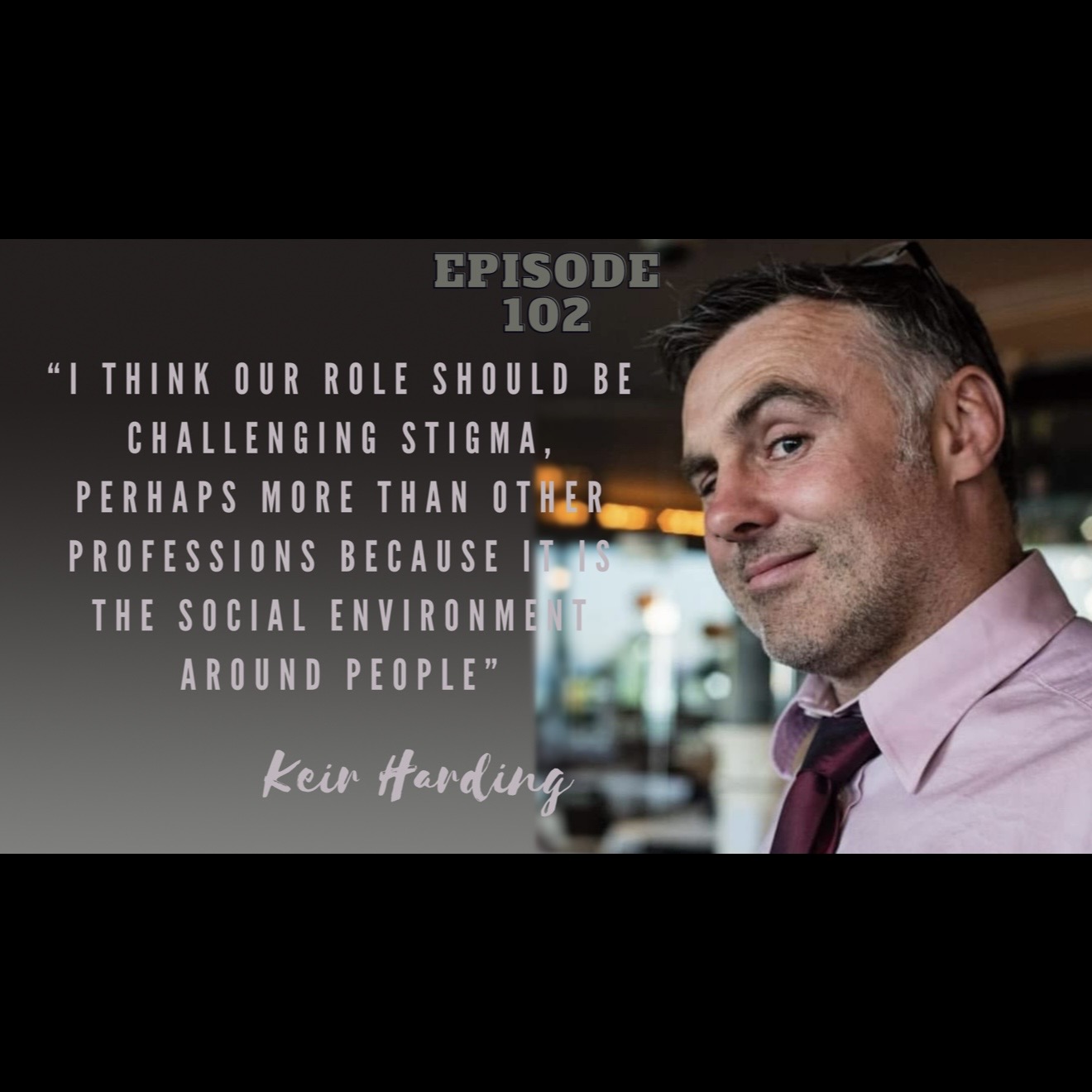
Keir is a bloke that has been on my radar for a VERY long time. I’ve followed his work and his projects for years through Twitter so meeting and connecting was well overdue for us. We discussed the complexities of the healthcare system and how that often fall short when working with people who are diagnosed with Borderline Personality Disorder. We also have an important discussion about suicidal ideation and self harm and where Occupational Therapy might actually fit when working with people experiencing these.
It’s super important that OT’s learn to become comfortable with these kind of conversations no matter what field they are working in.
Keirs links:
https://twitter.com/Keirwales
https://www.instagram.com/keirhardingot/
https://www.beamconsultancy.co.uk
Look after yourself, look after others and always keep Occupied
Brock
@brockcookOT
brock.cook@me.com
www.occupiedpodcast.com
Automatic Transcription
102 Difficult Conversations & BPD ft Keir Harding
00:00:01 – 00:05:02
So very accidentally so I my parents got divorced when I was doing my a-levels which is what you do before you go to UNI. Okay, so I didn’t have a brilliant time doing those exams before you leave. So I finished my levels without any offers for University. So I had to go through our clearing system of trying to find a place to do something so awful and I had it in my head but I was going to be a physiotherapist and I had this idea about traveling the world with Rugby teams and doing lots of massage and that kind of thing and you know started going through clearing couldn’t get these courses. And so someone said, well, what do you think about doing occupational therapy? And I went yeah, let’s do that and they’re right. Well think about you for this course, then we’ll think about you for the occupational therapy course will give you a call back and then because this was like a million years ago. I had to walk down the library to look up what occupational therapy was dead. Click through a couple of Brooks for yeah. Yeah, that’ll that’ll do about that might be okay might be able to switch to physiotherapy while I’m doing it and I am in London on an occupational therapy course, I think I was a terrible student for a big long time. And then I did my mental health placement on the second year. And yeah, I think the song is about being part of a touring rugby team went out the window then and I just thought I want to work in Psychiatry. This is where I want to be. What was what was the the placement was impatient or Yes, it was an inpatient. Psychiatric hospital I tell you one of the things that really struck me but and and it just kind of like really showed me that this place was very different to buy it experienced Soldier. So I was walking through the reception and there was this really bad smell and we looked around and if there was that and we looked over and there was this woman squatting on the floor defecating off. I was like look look what that woman’s doing and they said yeah, she’s visiting a guy on ward nine so the visitors coming in and doing this and I’m not going to get these expect other places in my life. I see that on a regular time. You never see anything like that interesting me write a couple of years ago. I was at this celebration of old T’s patients on Princess. Anne said to me. Oh, what was what was some of your memorable experiences and working in mental health and I felt oh do I tell that story or not and I did Serenading the royalty. So that’s that that’s clearly about the royal family want to hear stories about public expression. That’s what they want. I’m sure it’ll stand out as a highlight from a trip post. You’ll remember it hopefully cuz I can see she loves till I hit the punch line which might have been politeness a lot but they were a couple of people from the Royal College of Occupational Therapy looking at me as violence.
00:05:05 – 00:10:11
Yeah, if I just dropped my trousers in the room it was what is this man doing? He got a good story out of it. Yes. Yes, but it’s like I’m surprised impatient didn’t scare you away from mental health month, but I quite like the idea of getting people off the boards and it was my first experience of kind of doing things with people who were I kind of thought I probably couldn’t articulate it very well at the time but they were just kind of like outside of my reality and I felt that was quite fascinating that something had happened that they they were not connecting to the emails in the same way that I was so yeah talking to people who would repeat back everything you said talking to people who had ways of understanding things that sounded like some kind of spy novel and just I don’t know cuz she got to ask them about their lives in so much detail. You became a part of town. Narrative which seemed so much better than the see somebody and fix them up that kind of fell in the physical settings, but that really touched on the wage and the the stories was something I always cuz I work in a couple of different inpatient units over my career and the the stories you were here always fascinated me and home for me. The interest was more around sort of how that story developed cuz for a lot of them I could sort of work out like where the store or you had like, there’s some basis in reality to some of it and it was sometimes like a misinterpretation of an event or something that someone had said to them and then it’s sort of that got skewed and she could kind of almost tracked back to what actually happened to how they got from that to you know, whatever the the big tail that you were being told was and Thursday. Out of an OS just fascinated me and I think it really kind of cemented. I felt like a lot of people and it’s well-documented in history mental health treatment history that for a long time people in mental health were sort of treated almost as long as people they were you know to unroll with lock them away or we essentially treat them like farm animals and some cases and even just making that simple and a lot of home maybe still look at that, but that’s another story but I think that making for me making that link between like okay like these stories that are sometimes super her labret and out there and like you said something like a spy novel can sort of be interpreted into reality as I see it in a lot of cases is if you’re willing to spend the time and get to know the person and sort of explore it with them and that to me sort of went. I feel like these did that dip people know not not dead. Like in death of that, but it’s like they’re not it almost I guess gave me hope that the work that I was doing was actually going to offer help these people cuz there’s a lot of I’ve heard all you hear all sorts of things from other professions on boards and stuff like that where you know, you are such and such as hopeless has been here for months and months and he’s never going to get better or that kind of thing. And I think in the I always found working in a ward it was very much. I was kind of difficult for me in the first world that I worked that cuz I was a new grad because you kind of in this little bubble where you only ever see what happens on the war and I never cuz I was in new grad. I hadn’t committed any other places. You never see like the progress from the war you only ever see people at their very worst kind of thing. So I found in that role initially thought some of those sort of I guess perpetuating stigmas that other people were sort of taught other staff were saying on the ward. I almost started to I guess believe some of them like, you know, such-and-such is a hopeless case or back on it. So and I think yeah making that link between some of those sort of stories Andrea and my reality with my version of reality really so I think it was so high opening thing for me. Yeah a couple of weird things. I used to find working on an inpatient unit was dead. My Style Network people tended to be on inpatient units a lot longer, whereas now I think people kind of go in short admission and names again and I always remember some of my old colleagues say in do they get them off the board so quickly they they never leave them long enough so that they’re able to access OT and I always used to think.
00:10:11 – 00:15:30
Just getting there. What are you talking about? You know, freshener you where people have got to be a certain level of Wellness for you to get involved and I always thought quite annoyed that people didn’t see that that Acuity off when somebody came in but that was a reason to walk away as opposed to a reason to get in there when they’re functioning was absolutely through the floor. So yeah, I got off of frustration with my colleagues when they’re going to I had the same thing and in the one of the impatient years that I worked at because there was multiple OTS but on the second one, I was the only one so I just did Ed. Myself,