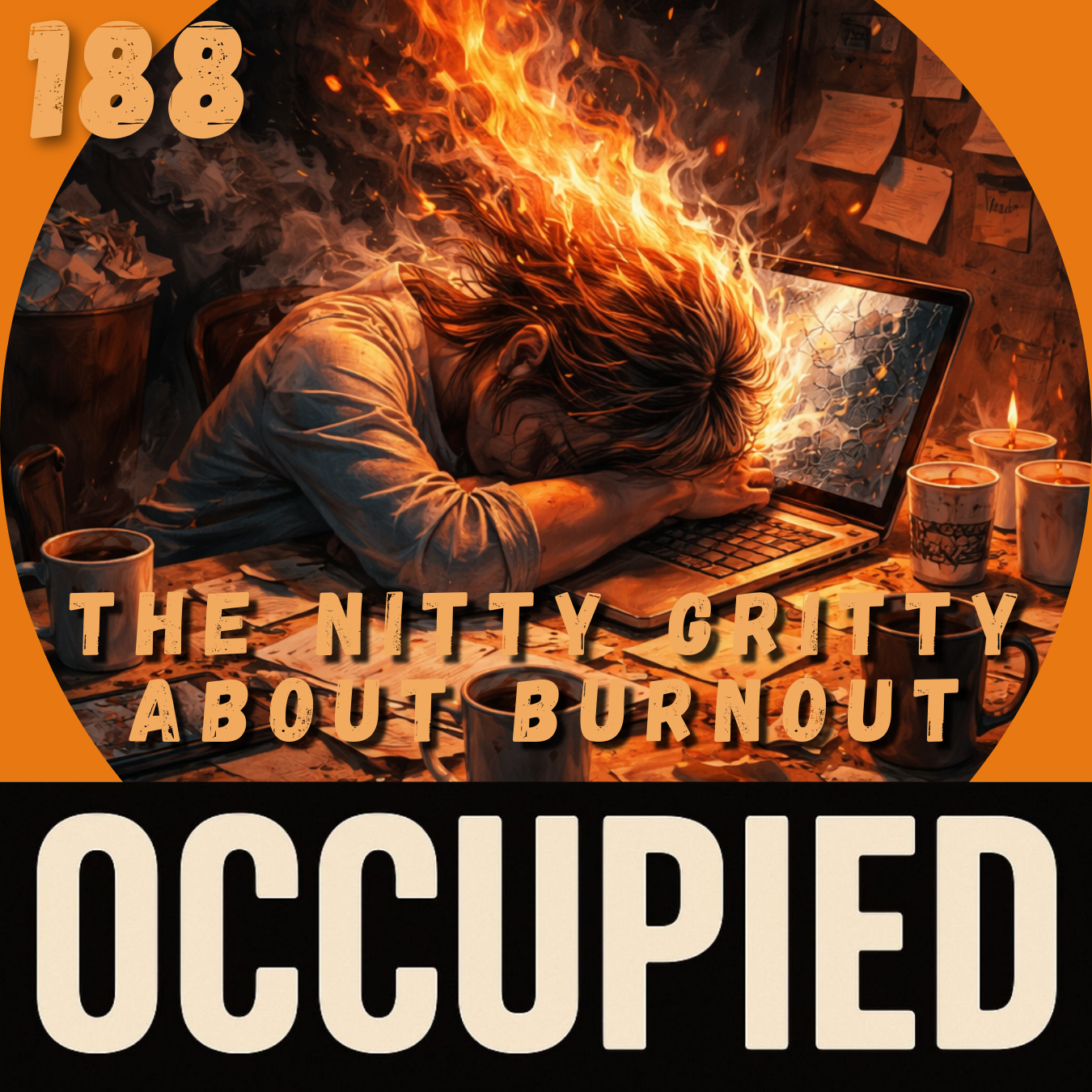
Burnout gets talked about a lot — but rarely with clarity.
In this episode, Brock and Jess unpack the biology of burnout and challenge the flood of non-evidence-based ideas circulating online. If you’ve ever been told burnout is “just stress,” “just poor boundaries,” or something you can fix with a weekend off… this conversation is for you.
We explore what’s actually happening in the nervous system when burnout sets in — including:
- The role of the amygdala and chronic threat activation
- What happens to the prefrontal cortex under prolonged stress
- How the stress response shifts from adaptive to maladaptive
- The Default Mode Network and why cognitive flexibility drops
- Why productivity, empathy, and executive functioning decline
- The overlap (and differences) between burnout and trauma
One of the biggest problems with burnout is that people experiencing it often don’t understand what’s happening to them — which can lead to shame, self-blame, and pushing harder when the body is actually signalling overload.
This episode reframes burnout as a biological state shift, not a personal weakness.
For occupational therapists — and anyone working in high-demand caring roles — understanding the mechanisms behind burnout changes how we respond to it in ourselves, our colleagues, and our clients.
Because you can’t intervene effectively in something you don’t understand.
Instagram: @OccupiedPodcast
Facebook: Occupied Podcast
Host: Brock Cook & Dr Jessica Levick
Subscribe now and never miss an episode!